Why a Tree Removal Assessment Matters Before You Cut Anything Down
A tree that looks dangerous from the driveway might actually be perfectly sound. And a tree that looks healthy can be rotting from the inside, ready to come down in the next storm. That is why a proper tree removal assessment matters more than most homeowners realize. In DeLand, Florida, where the tree canopy is dense and storms roll in fast, getting an expert evaluation before removing any tree is not just a good idea, it can save your property, your budget, and even your peace of mind.
What a Tree Removal Assessment Actually Involves
A tree removal assessment is not just a quick walk around the trunk with a clipboard. It is a structured evaluation that considers the tree's health, its position relative to structures and utilities, the surrounding landscape, and the local regulations that govern tree removal in your area. An ISA Certified Arborist will typically conduct the inspection, looking at the tree from the ground up, and sometimes from the canopy down, using binoculars or even climbing gear if needed.
The assessment covers several key areas. First, the arborist checks the root system. Are there visible roots heaving the soil? Is there decay at the base? Is the tree leaning in a way that suggests root failure? Next comes the trunk itself. Cracks, cavities, fungal growth, or signs of past damage all get noted. Then the canopy gets inspected for dead branches, poor attachment points, and overall vitality. A thorough tree removal assessment also includes a tree risk assessment, which evaluates the likelihood of failure and the potential consequences if the tree falls. This is where the real judgment comes in.
When a Tree Needs to Go vs. When It Can Stay
Not every tree with a problem needs to be removed. Many issues can be managed with pruning, cabling, or other interventions. But there are times when removal is the only safe option. A disease assessment might reveal advanced decay or a fungal infection that has compromised the structural integrity of the tree. In those cases, leaving the tree in place puts your home, your car, or your family at risk of property damage. On the other hand, a tree that is simply dropping leaves early in the season might just be stressed from drought and could recover with proper care.
An experienced arborist will weigh these factors carefully. They will also consider the tree species. Some species are more resilient to wind and decay than others. A live oak might be able to survive a storm that would snap a brittle pine in half. The assessment helps you understand what you are dealing with and what your options really are.
Regulations and Permits in DeLand, Florida
Many homeowners do not realize that removing a tree can require a removal permit, especially in areas like DeLand where the tree canopy is protected by local ordinances. A tree removal assessment will typically include a site survey that documents the tree's size, species, and condition, information that is often required when applying for a permit. If you cut down a protected tree without a permit, you could face fines or be required to plant replacement trees at your own expense. An arborist who knows the local rules can help you navigate this process without surprises.
This is where a company like VBT Tree Removal, with its local experience in DeLand, can make a real difference. They understand the permitting process, the specific tree species common to the area, and the best practices for landscape preservation. They also carry liability insurance, which is essential when working near structures and power lines.
Practical Considerations: Safety and Logistics
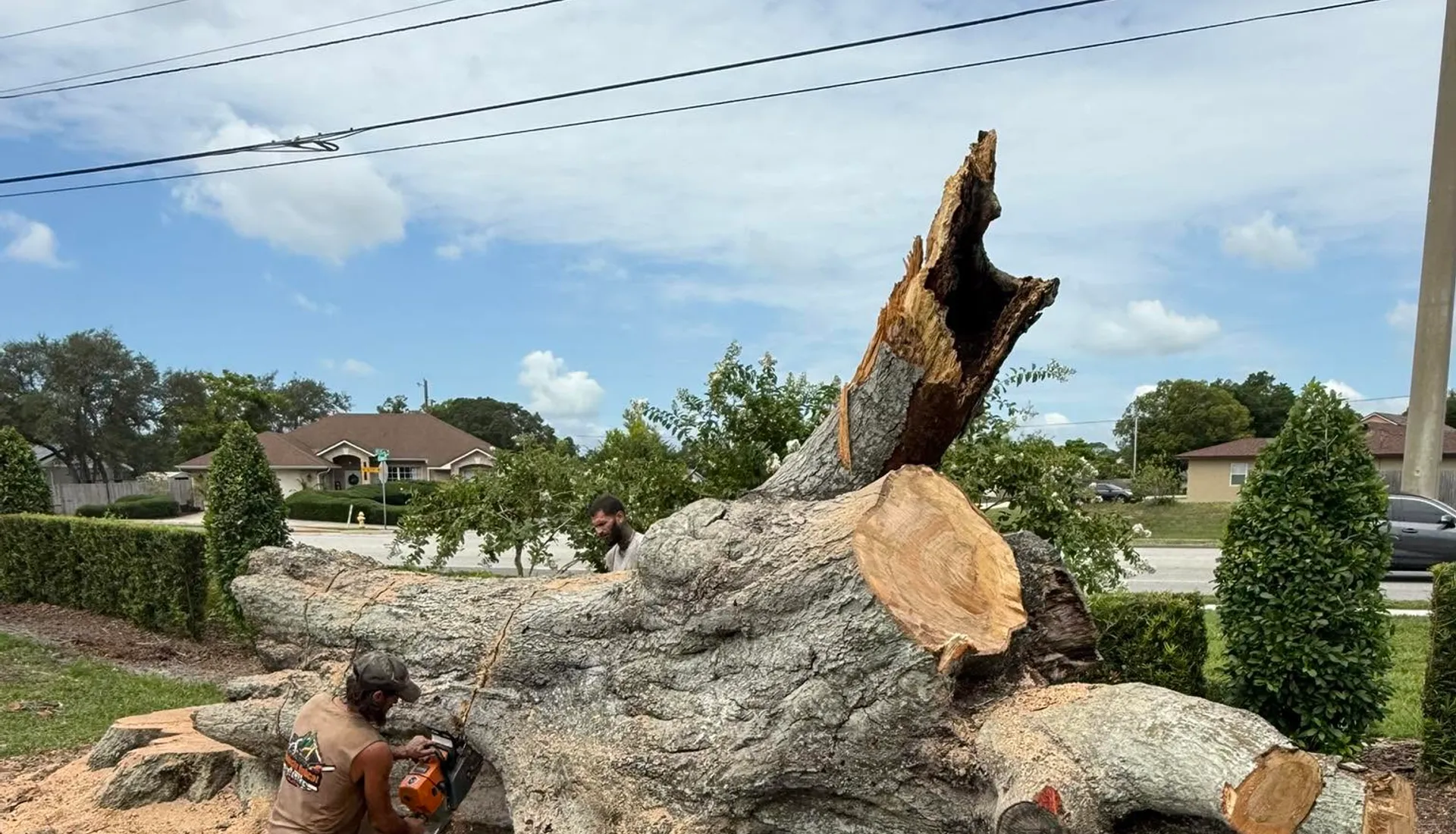
Tree removal is dangerous work. Even a relatively small tree can weigh several tons, and getting it down safely requires careful planning. During a tree removal assessment, the arborist will identify the safety zone, the area where people and property need to be kept clear during the work. They will also determine whether special equipment is needed, such as a crane service for large trees or trees that are difficult to access. In some cases, the tree may be too close to a house or too tangled in utility clearance zones to be felled in one piece. That means the crew will have to dismantle it section by section, a process that takes skill and patience.
Storm damage adds another layer of complexity. After a hurricane or severe thunderstorm, trees may be leaning, split, or hung up in other trees. A quick tree removal assessment in those situations has to balance urgency with safety. The arborist needs to decide whether the tree can be stabilized temporarily or if it needs to come down immediately. Emergency response calls for fast but careful judgment, and not every company is equipped to handle that kind of pressure.
What Happens After the Tree Comes Down
Removing the tree is only part of the job. The stump left behind can be an eyesore, a tripping hazard, and a magnet for pests. Most removal services include stump grinding as an option, which grinds the stump down below grade so you can plant grass or other landscaping over the spot. A good tree removal assessment will include a plan for the aftermath, not just the removal itself, but what happens to the site afterward. Will the soil need to be leveled? Will you want to plant a replacement tree? These are questions worth asking before the saw starts.
Landscape preservation is another factor that gets discussed during the assessment. When a large tree comes down, the surrounding plants and turf can be damaged by falling limbs or equipment. A careful arborist will plan the work to minimize that impact, sometimes using rigging techniques to lower branches instead of letting them drop. That kind of attention to detail is what separates a professional job from a hack job.
The Cost of Skipping the Assessment
Some homeowners try to save money by skipping the tree removal assessment and just hiring someone to cut the tree down. That can backfire in several ways. Without a proper assessment, you might remove a tree that could have been saved, losing shade and property value for no good reason. Or you might underestimate the difficulty of the job and end up with damage to your house, your fence, or your neighbor's property. In the worst cases, an unassessed tree can fail during removal, injuring someone or causing thousands of dollars in damage.
A thorough tree removal assessment costs a fraction of what a botched removal can cost you in repairs and liability. It also gives you documentation that the work was done properly, which can be important for insurance purposes or if you ever sell your home. In DeLand, where the tree canopy is part of the community's character, making informed decisions about tree care is just good stewardship.
So before you call anyone to take down a tree, get a real assessment first. It will tell you what you need to know, help you avoid unnecessary expense and risk, and give you confidence that the tree is being handled the right way. That is the kind of peace of mind that no chainsaw can provide.